

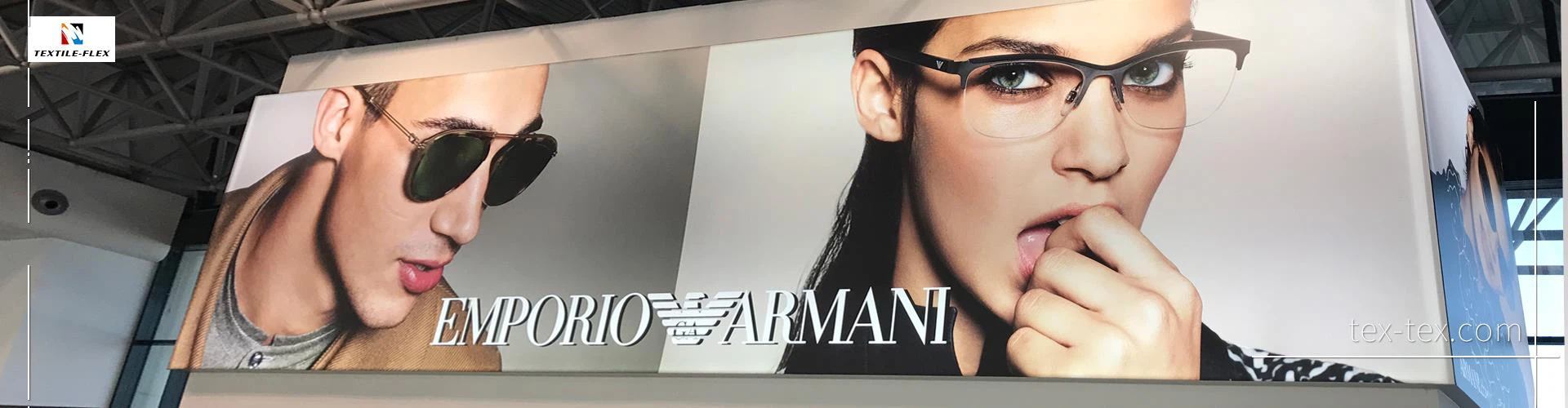
Digital Printing Fabric
Digital fabric printing is a relatively new way to print on fabric. It's just like when you print a photo to your ink jet printer at home. The printer feeds a roll of fabric through a large-format ink jet printer and the design is printed directly onto the fabric.
Why Choose Us
Experience
Being in digital printing for 13 years since 2008 and in textile business for 16 years since 1995.
Production
We are producing top quality digital printing fabrics for Backlit/Light Box, Display/Frontlit, Blockout/Blackout, Tent, Flag, Table cloth and many other specialties.
Technology
All textile products are produced by high-quality production lines, advanced techniques, and unique chemical recipes, to make sure consistent quality is achieved for each order, no matter whether it is one roll, one pallet, or one container.
Shipping Service
We have established a robust shipping service offered to ensure timely and secure delivery of orders worldwide.
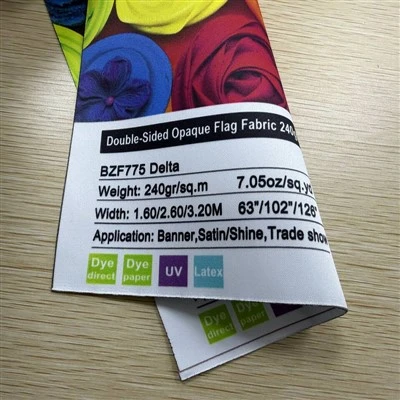






To help you start the process, let's explain the technology involved
- People use this versatile method for reproducing detailed images and patterns, photographs and complicated designs. Additionally, it is most advantageous when designs have multiple colours and the required meter or run rate is lower.
- The base fabric we use is usually white, ecru or Ivory. These shades will give the best reproduction of the design. Coloured fabrics can be digitally printed. However, like your desktop printer, one only adds the colour on top, and this may affect the overall effect.
Inks used in digital printing
- Digital fabric printers print fabric with a number of inks. These range from the 4 process colours, Cyan, Magenta, Yellow and Black (CMYK) to between 8 and 12 colours. Additional colour channels add to the fabric printer's overall 'gamut' or colour space. This expands the range of colours that the machine is able to reproduce.
- The wider the gamut, the greater the ability to reproduce fine tones, hit specific spot colours or outlying bright colours. Some printers may use Orange, Blue, Green, Red etc to improve the strength of certain shades.
- They might use light colours such as Light Magento or Light Cyan to improve skin tone gradients. And then they could use greys and blacks to help with Black tones. Some machines even allow one to add fluorescent colour channels. However, currently metallic colours cannot be printed digitally.
- This type of fabric printing digitally reproduces any design or image you want to create. It lets you use as many colours and tones as you wish, at any scale. Software called a 'RIP' converts the digital images to colours for each ink channel.
The 2 fabric print methods to use digitally
- There are two main types of digital fabric printing – direct-to-fabric and sublimation printing using transfer paper. When designs are printed via either of these methods, we use similar machinery. Sometimes they even use the same machines that have had slight modifications.
- The results are superb high-quality designs that don't take long to print.
- Remember this when you need to order smaller runs of exceptional quality custom digital printed materials. And don't forget this when you have quick turnaround times.
How sustainable is this fabric print method?
- The digital process is known for its sustainability. It uses water-based inks that are eco-friendly and don't contain chemicals.
- This is one of the single most important advantages of this method. It reduces waste compared to other printing processes.
- Usually, printed fabrics only becomes economical when the runs are high. But this isn't the case with the digital process.
- You can print your design on exactly the amount of fabric you need. And as you're already printing using this type of ink, this method is very sustainable. Additionally, as you are printing the design you need, there is no compromise on design. You can also buy mass-produced fabrics.
Feature of Light Blocking Fabric
Light Blocking Fabric is a 245gsm lightweight blockout fabric with white-black-white structure for Lightbox backing. The black layer in-between is highly opaque, can blockout 100% lights.
Light Blocking Fabric has very soft hand and crease-free feature, making it ideal for folded shipments in a box. The blockout fabric has anti-sticky coating resin. With high white print face, light Blocking Fabric is printable with transfer sublimation.
Feature:
-100% polyester & PVC free
-Very soft
-Crease free
-100% opaque
-Blockout
-White/black/white
-No sticky

Digital Printing Materials: Which Fabric Is Best For Digital Printing?
Digital textile printing is the latest innovation within the textile printing industry. An increased number of printers are making the transition to digital printing and benefit from the competitive advantage that it offers them, the fast production rate and the possibility to print complex designs and fine patterns. Before deciding if digital textile printing could be of interest to your printing company, it is essential to know what are the possibilities of digital printing regarding the materials that can be digitally printed on.
Digital textile printing technology explained
- Digital textile printing is an inkjet-based printing method that enables printers to print high-quality designs on an extensive range of fabrics. Nevertheless, there are some fabrics that are not suitable for this specific printing technique. In this article, I specify which fabric is best for digital printing. Which fabrics can and which cannot be used in digital textile printing?
- To fully understand why certain fabrics cannot be used for digital printing, it is essential to understand the technology behind digital printing. In digital printing, the materials first need to be pretreated. After that, it will pass through the inkjet printer at high speed. A digital textile printing machine uses a printable design of a digital data file, reads the right color information, and prints the colors onto the digital printing materials.
- The fabric is colored by minuscule droplets of ink, which are produced by numerous print heads. These print heads are positioned a few millimeters above the substrate (for example, SPGPrints Archer+ technology enables a distance of 4 millimeters from the substrate).
Digital printing materials
- In digital textile printing, the many print heads ensure high-quality designs and enable a fast production rate. However, due to the print heads being close to the fabric, there are some materials that cannot be used for digital printing. For example, fabrics that have quite some loose threads, can come in contact with the print heads and cause damage.
- The digital textile printing technique can be used for both woven and knitted fabrics. Below, I specify which digital printing materials there are and which materials are not suitable for digital printing. I will also mention which type of ink matches the digital printing materials well. If you want to know more about these inks, please download our Ink Selection Guide here.
Cotton
Cotton is a natural fiber that is especially used for clothing within the fashion industry, mainly because of its high moisture control, comfort, and durability. With a digital textile printing machine, you can print on cotton. To obtain the highest quality possible, most digital printers use reactive inks since this type of ink provides the highest wash fastness for prints on cotton.
Viscose
Viscose is also one of the digital printing materials widely used in the fashion industry. As is the case with printing on cotton, you will get the best results when printing on viscose with reactive ink.
Wool
- Printing on wool with a digital textile printer is possible, but this depends on the type of wool you are using. If you want to print on "hairy" wool - meaning a type of wool which has a lot of loose threads sticking out - the print heads have to be positioned as far away from the substrate as possible. Woolen yarn is five times as thick as the diameter of the nozzle in the print head and can therefore severely damage the printer head.
- For this reason, it is important to choose a digital printer that enables you to position your print heads at a considerable distance from the substrate. SPGPrints' Archer+ technology supports a printer head distance of four millimeters, compared with the typical 1.5 mm nozzle-fabric distance offered by other print heads, which enables you to digitally print on any type of digital printing materials - even hairy wool.
Silk
Another natural fiber that can be used as a digital printing material is silk. Silk can be printed with reactive ink (when high-fastness is priority) or with acid inks (if colour gamut is priority).
Polyamide lycra
Polyamide lycra is a type of fabric that is mainly used for swimwear. It is possible to use as digital printing material, preferably with acid inks. By using acid inks, you obtain the highest colour brilliance, wash fastness and resistance for saltwater and chlorine.
Polyester
- Over the last couple of years, polyester has become an increasingly popular fabric within the fashion industry. However, the most commonly used ink for printing on polyester, disperse ink, does not work well when printing with high-speed digital printers. A typical problem is printer contamination through ink mist.
- Therefore, printers have switched to sublimation printing on paper and recently successfully switched to direct printing on polyester fabric with sublimation inks. The latter requires a more expensive printer since a belt system to hold the fabric is needed, but it saves printers paper costs and no steaming or washing is required.
Screen Printing (Flatbed and Rotary)
As mentioned, much of the world's fabric printing production has traditionally been done on flatbed or rotary screen printers. If you've purchased fabrics at large retail stores it's likely that the fabric was printed overseas on a screen printer. Screen printers utilize either flat screens or a rotating cylindrical screen to essentially transfer the patterns onto the fabric with various colors of ink. Each color used in the design requires its own screen.
There are various types of inks and technologies used in screen printing. Water-Based Pigment printing is the most popular type because it works on all types of fabrics and blends while also being a more eco-friendly and repeatable process. Other processes utilize reactive dye printing for cotton and cellulosic fabrics, disperse printing for polyesters, and acid printing for nylons and silks.
Pros of Screen Printing:
- Screen printing, particularly rotary printing, is a fast printing method that can produce large quantities of fabric quickly and efficiently.
- Able to produce vibrant colors
- Works on a wide variety of fabrics
- If over 1,000 yards, screen printing may be the better option.
Reactive Dye Digital Fabric Printing
Reactive dye and acid dye digital printing utilizes digital ink-jet style printers to print designs on fabric. A reactive coating is applied to the fabrics, creating a reaction that helps the reactive or acid dyes bond to the fabric. This process requires the printer, a steaming unit, a washer unit, and a drying oven. Through the process of steaming, washing, and drying a chemical reaction between the coating and the dye creates a long-lasting bond with the fabric.
Reactive dyes work well on all cellulose fibers such as cotton, linen, rayon, hemp, bamboo, and many other natural fiber fabrics. Acid dyes tend to work best on protein fibers like silk, wool, and nylon.
To use the reactive method of printing, a printer will need permits from AQMD (Air Quality Management Department) because the process discharges dyes and chemicals into the sewer through the washing process. Due to its complexity, reactive dye printing requires a good knowledge of the process and an awareness of its limitations.
One of these limitations is that this method is not completely repeatable due to the nature of the process. Since it relies on natural fibers that can change from batch to batch to print and create the bond, you will likely see small color changes from one print run to the next with the same design. For this reason, reactive dye printing is best for one-off printing runs.
Pros of Reactive Dye Printing:
- Able to produce vibrant color.
- Works well on a wide variety of natural fiber fabrics.
- Dye Sublimation Digital Fabric Printing.
Dye sublimation fabric printing is a popular fabric printing method that has enabled many small print shops to open for custom fabric printing. It is not a direct to fabric printing method, but rather prints the design onto a special transfer paper using a sublimation ink. The design is then transferred onto the fabric from the paper using heat and pressure to bond the ink to the fabric. The heat and pressure causes the sublimation ink to transform into a gas and permeate the fibers of the fabric, creating a permanent, high-quality image.
While this is a very good printing method it does have its limitations and downsides. This process works only with synthetic fabrics like polyesters and will not work with natural fiber fabrics. Obviously these types of fabrics are not as green and healthy as natural fibers, causing many conscious shoppers to start steering away from synthetic fabric bases as more awareness has been raised in recent years. Dye sublimation also has some environmental concerns since it requires the ongoing usage and disposal of the transfer paper.
Pros of Dye Sublimation:
- Simple process with options for low-cost smaller printer setups to empower small businesses.
- Quality, high-detail prints.
- Digital process allows for quick turnaround time.
- Repeatable process with consistent colors between print runs.
Our Factory
Textile-Flex is textile expert in digital printing, producing top quality textile products for direct dye sublimation, Paper transfer sublimation, UV, Latex, Eco-solvent, and Solvent printing.Our main products include backlit fabric, stretch display fabric, blockout fabric, tent fabric, flag fabric and table cloth fabric. Our premium backlit fabric, stretch display fabric, black back/grey back blockout fabric, anti curl roll up banner fabric, flag banner fabric, and PU coated tent fabric are all produced by high-quality production lines, advanced techniques, and unique chemical recipes, to make sure consistent quality is achieved for each order, no matter it is one roll, one pallet, or one container.


FAQ
As one of the leading digital printing fabric manufacturers and suppliers in China, we warmly welcome you to wholesale high quality digital printing fabric made in China here from our factory. Contact us for more service.
